



Press Release
A Chip Falls Out, and Pakistan's Digital Identity Grows Up
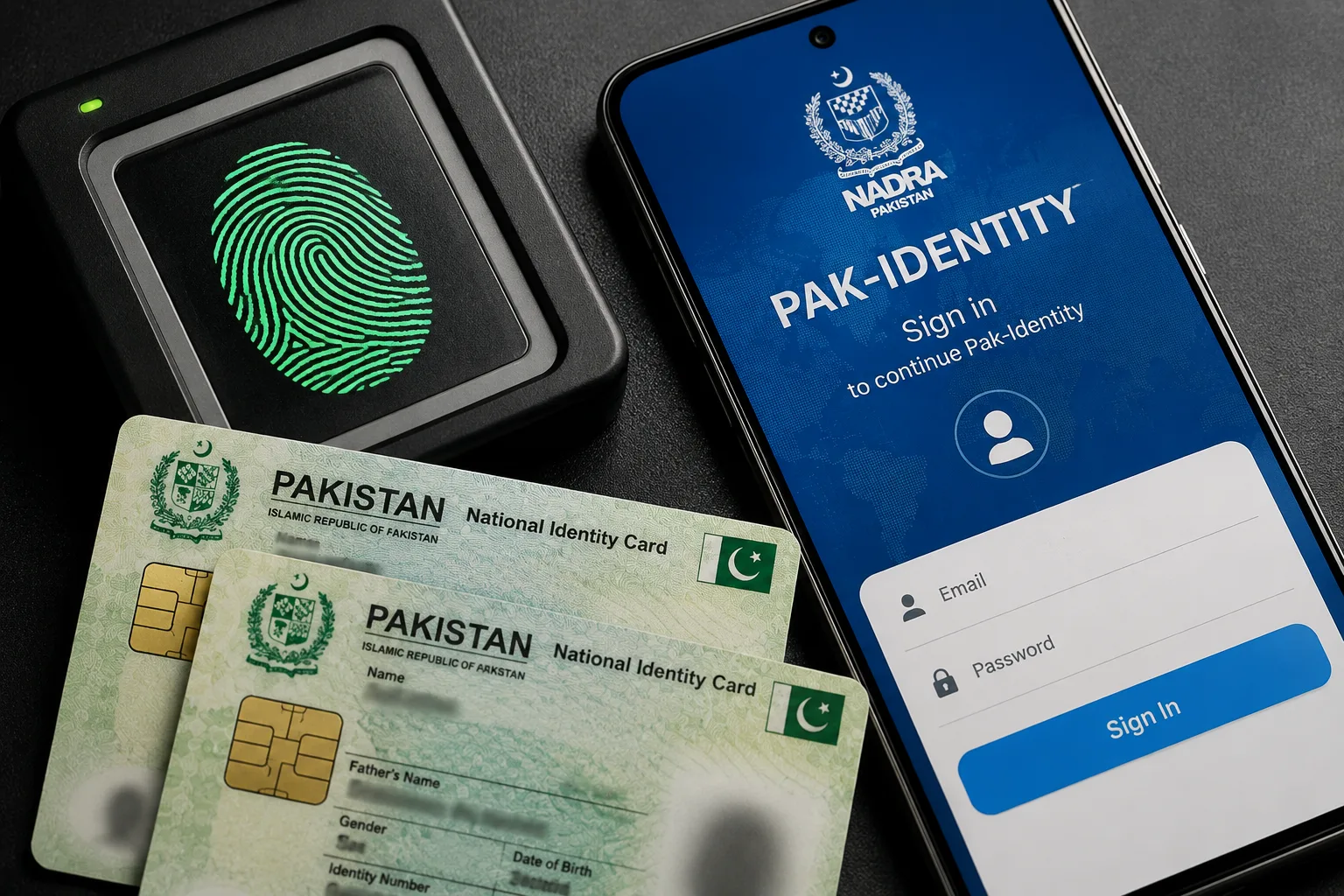
NADRA retires the microchip. The new national identity card carries a QR code instead, readable by any smartphone through the PakID app.
On August 14, NADRA retired the microchip. The new national identity card carries a QR code instead, the kind you'd scan for a restaurant menu, readable by any smartphone through the PakID app. It's printed on a polycarbonate card manufactured in Karachi by the National Security Printing Company. Though the press wrote it up as a technical upgrade, it is really a sign that Pakistan is finally understanding what identity infrastructure is meant to do for its people.
The Smart NIC launched fourteen years ago as a genuine leap forward, and it was the right call for its time. What has changed since is the infrastructure around it: smartphones are now in far more hands than chip readers ever reached, across point of sale terminals, hospitals, and bank counters. A QR code matches how people actually verify things now, on a device almost everyone already owns. NADRA is refining its systems instead of leaving them as they were a decade ago. The next step was simple: build for the phone people already carry.
The “made in Pakistan” framing matters too, and not just as national pride. A chip supply chain is a foreign policy liability disguised as a procurement line item. Every unit sourced from an external vendor is a future price shock, export control risk, or geopolitical lever. Manufacturing the credential domestically through NSPC, and defining the verification method in law as “a QR code or any other technological feature” rather than naming a specific chip standard, is a small piece of institutional wisdom: write the rule for the outcome you want, not the artefact you happen to be using. That single clause means NADRA can update its verification technology for the next decade without amending the rules each time. Other countries have made the same choice already, and there have been some positive outcomes.
Estonia went earliest and furthest. Its ID does not only prove who someone is, it lets them sign. Vietnam pushed VNeID further, into land titles, so the same ID that proves who you are also proves what you own. South Africa has committed to building its services around a digital identity core. Aadhaar is India's national ID programme and Aadhaar-based eKYC is what made it possible to open bank accounts at the scale UPI later needed. The World Economic Forum has directly credited that same approach for Pakistan's own instant payments system, Raast, which already relies on NADRA to confirm who someone is before a bank account opens. Trading a chip for a QR code is the same bet every one of those countries made: make identity simple and easy to check first, then build everything else on top of it.
Since the Digital Nation Pakistan Act 2025, identity is one of PDA's foundational rails, sitting alongside payments, cloud, and the National Data Exchange Layer as shared infrastructure that every ministry and sector is meant to build on rather than reinvent. Digital Public Infrastructure sub-stacks for health, education, and property rest on one idea: if identity verification becomes cheap and universally available, entire sectors that currently run on paper and discretion, including degree attestation, land records, hospital intake, and SME registration, can be rebuilt around it far faster than anyone building each one from scratch. A chipless card that any phone can read is proof that this rail works at a street level, and not just in a masterplan document.
Every citizen who scans their card at a bank or a hospital counter from now on is testing the same foundation PDA is building everything else on top of. If identity can be made this ordinary, this fast, and this domestically owned, the rest of the sub-stack vision, health records, land titles, degree attestation, business registration, stops looking like a slogan and starts looking like a schedule.