



Press Release
Inside the Fuel Relief Programme: How Pakistan Reached ~13 Million Citizens
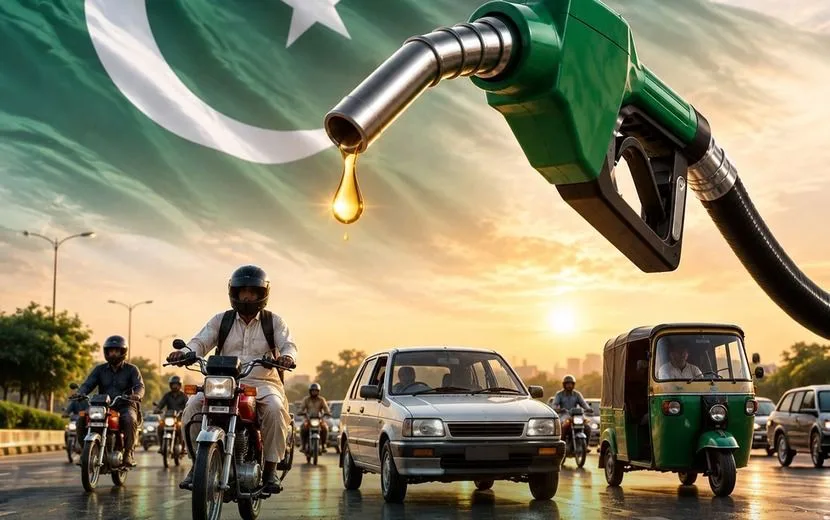
How the Pakistan Digital Authority delivered the Fuel Relief Programme to 13 million citizens on national digital rails. See how it was built.
When fuel prices climb, the people who feel it first are not the ones you'd see complaining about it. A man who rides a motorcycle between three jobs cannot even keep track of how the biggest chunk of his pay goes into the tank. Ask a rickshaw driver how his day went, and he'll probably tell you in litres: how many he burned, how many he's got left, whether the last fare even covered them. Then there's the family with the small car, kept running on a budget that had no slack in it to begin with. When petrol gets dearer, they don't announce anything. They just go out a bit less, and some errands wait until they can't wait any longer.
Rising prices are never abstract for these households. They arrive in daily decisions that impact their quality of life.
The Prime Minister's Fuel Relief Programme was built with those people in mind. It offered motorcycle riders, rickshaw and qingqi operators, and small-car owners a discount of Rs100 on every litre, aimed at the ones who earn their living on the road. It's an easy idea to describe. Anyone who has tried to get help to millions of people at once knows how much harder it is to carry out.
The Pakistan Digital Authority (PDA), under the Ministry of Information Technology and Telecommunication (MoITT) built the digital service that carried the relief from start to finish, and they did it without building a single new national system from scratch.
In a matter of weeks, the programme reached around 13 million people. More than 37 million fuel tokens were generated, and over 34 million were redeemed, which shows relief did not sit unused. Nearly every token made it to a pump and into a tank. It reached the people it was meant for, and they spent it, one litre at a time.
What It Took: The People Behind the Fuel Relief Programme
A program like this is ultimately an act of faith, not just an architecture of code. Software doesn't keep a country running, it is the people behind it who make it work, who choose to show up for something larger than themselves.
At PDA, many of our personnel stepped away from their regular work and gave themselves to this instead. While engineers built the end-to-end digital service for citizen, the non-technical colleagues stepped up to do the exhausting, unglamorous labor of making a national service actually function by answering queries, checking records and walking people through a completely new process.
The leadership went out to the petrol pumps to help people navigate the system. The people who had architected this were not just working behind a curtain of hierarchy, they were closing the gap between the government and the governed. "Citizen-centric" ceased to be just a phrase in a strategy document and became a promise.
Designing for Fairness: Making Sure the Relief Reached the Right People
The technology was the easy part. The real nightmare was ensuring it was delivered to those who needed it the most.
A fuel subsidy isn't just data on a screen; it is a lifeline. If you build it with even a single blind spot, the whole thing bleeds out. One person cheats the system a dozen times over, ghost vehicles swallow up the funding, and the money meant to buy a day's worth of groceries for a struggling family vanishes into someone else's pocket. When a public system leaks, the people who actually need it are the ones who pay the price. The team's real task was to close every one of those doors without making the honest user jump through hoops. One verified identity. One eligible vehicle. One entitlement, checked in real time, impossible to duplicate.
This is where the Minister's vision set the direction. Federal Minister for IT and Telecommunication Shaza Fatima Khawaja made sure the money reached the right people, and only them. No long queues. No stack of forms to fill in. No one in the middle taking a cut. She wanted people to receive the relief without having to beg for it. Getting that fairness right under massive pressure was everything, and the team actually pulled it off.
The National Rails Behind the Petrol Subsidy Scheme
Here is the real takeaway for how we build public services in Pakistan. None of this required new infrastructure, it ran on rails we already own.
The team at PDA put this service together by plugging into existing networks that were already up and running. The National Database and Registration Authority (NADRA) checked identities, the State Bank of Pakistan (SBP) handled the digital payments, Excise and Taxation supplied the vehicle records, and the Oil and Gas Regulatory Authority (OGRA) and the National Explosives and Petroleum Safety Agency (NEPSA) provided the fuel-station data. Ten federal and provincial agencies took part in all, each holding one piece of the puzzle.
The quiet achievement here is cooperation. Institutions that usually operate in their own lanes moved together, to one deadline, for one end goal. Under MoITT's coordination, they stopped behaving like ten separate organisations and started working as a single delivery team. That alignment, more than any single piece of technology, is what let a national scheme stand up in weeks rather than years.
What We Learned, and What Comes Next
Building a massive system under this kind of crushing time pressure teaches you things you can't learn in a comfortable boardroom.
The first is technical. Building on shared national systems, rather than starting over each time, makes a speed possible that used to be out of reach. Identity records, payment channels, and the data each institution already holds are national assets, and a new service can simply use them. Reusing them also means the service is up and running sooner, and it costs less than building from scratch. People are more willing to trust something they already know works.
Pakistan needs to deliberately invest in such shared foundations and build more national rails. Along with verified identity and trusted payments, we need WASL – Pakistan's National Data Exchange Layer, which lets institutions share information with consent and control. Then we layer a growing capacity for AI and data-driven decision-making on top of those rails, and the state shifts from reacting to anticipating.
Cooperation was the second lesson. Departments in government tend to work in separate corners, and that is a large part of why things drag. This time the minister set a clear goal and stood behind it, and ten institutions worked as one. The goal was shared and the deadline was real, and everyone gave it their best.
The third came down to the person at the pump. Build the system around them, not around the process, and they are more likely to trust it. Keep it simple for people who are honest and make it hard for anyone who isn't. The relief reaches those it was meant for.
The recognition that has followed is well deserved. The Prime Minister has announced a national honour for Minister Shaza Fatima Khawaja, to be conferred on Pakistan Day, for her leadership on the programme's digital delivery, with the officials and teams behind it recognised alongside her. It is recognition earned under crushing time constraints, for a programme that showed what the state can do when it designs around its own people.
What comes next is the real prize. The same playbook, the same rails, and the same way of working can carry far beyond fuel. Any relief that must reach millions quickly and fairly, from targeted subsidies to disaster payments, can be delivered this way. This is what Digital Nation Pakistan and the Authority's mandate are for, and the Fuel Relief Programme is the proof the whole country can build on.
This is what digital public infrastructure looks like when it is put to work for ordinary people, and it is the advantage Pakistan will reap a hundredfold as the work of digital transformation continues.
Frequently Asked Questions
What is the Fuel Relief Programme?
The Fuel Relief Programme is the Prime Minister's nationwide fuel subsidy scheme, delivered digitally to help lower-income motorists manage rising fuel prices. It gives eligible riders and drivers a per-litre discount at the pump and has reached more than 13 million citizens across Pakistan.
Who is eligible for the fuel subsidy?
The programme is aimed at the people who depend on their vehicles to earn a living: motorcycle riders, rickshaw and qingqi operators, and owners of small cars. Eligibility is verified against national identity and vehicle records, so the relief reaches the intended person and no one else.
Who built and delivered the programme?
The Pakistan Digital Authority (PDA) built the end-to-end digital service under the Ministry of Information Technology and Telecommunication (MoITT), working with ten federal and provincial institutions. It runs on existing national rails, including NADRA for identity verification, the State Bank of Pakistan for payments, Excise and Taxation for vehicle data, and OGRA and NEPSA for fuel-station data.
How much relief has the programme delivered?
More than 37 million fuel tokens have been generated and over 34 million redeemed, across 13 million onboarded citizens. The scheme stood up in a matter of weeks rather than years.