



Press Release
Pakistan Digital Authority meets Punjab Socio-Economic Registry leadership to align on data governance, interoperability, and consent-based exchange through WASL.
Better public services begin with better data governance.
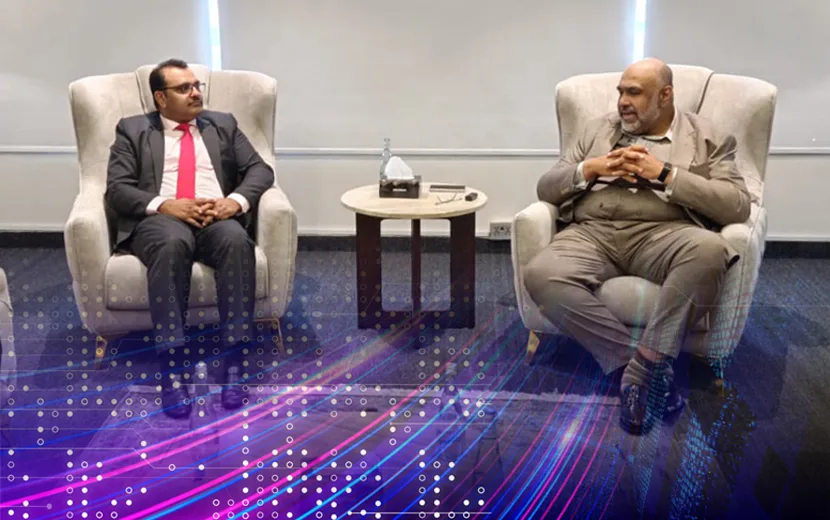
Yesterday, the Pakistan Digital Authority (PDA) hosted Qamar Zaman Qaisrani, President of the PMS Officers Association and Project Director of the Punjab Socio-Economic Registry (PSER), along with the PSER leadership team, for a discussion on data governance, secure data exchange, and Digital Public Infrastructure (DPI).
A registry like PSER holds detailed socio-economic data on millions of citizens. The value of that data depends entirely on how well it is governed: who may access it, under what consent, and how it moves between institutions without being exposed or pooled. On this concern, Dr. Sohail Munir, Chairperson, PDA, briefed the team on the Authority's mandate and on WASL, the National Data Exchange Layer, which lets government institutions exchange verified data through secure, consent-based pathways. He outlined the wider framework PDA initiatives sit within: the National Digital Masterplan, the proposed National Digital Commission (NDC), and the National Data Governance Policy.
Their discussion focused on interoperability, evidence-based governance, and enhancing targeted social protection. Both organizations agreed to continue technical consultations, share knowledge and policy frameworks, and explore standardized, privacy-preserving data exchange mechanisms aligned with national priorities.
“Secure, consent-based data exchange is the foundation a digital state rests on” and such registries function optimally when integrated safely with complementary systems. A partnership between PDA and PSER represents collaboration between the entity overseeing national data exchange infrastructure and the institution maintaining the data itself, essential for developing Pakistan's digital ecosystem with interoperability, security, and citizen priorities in mind.