



Press Release
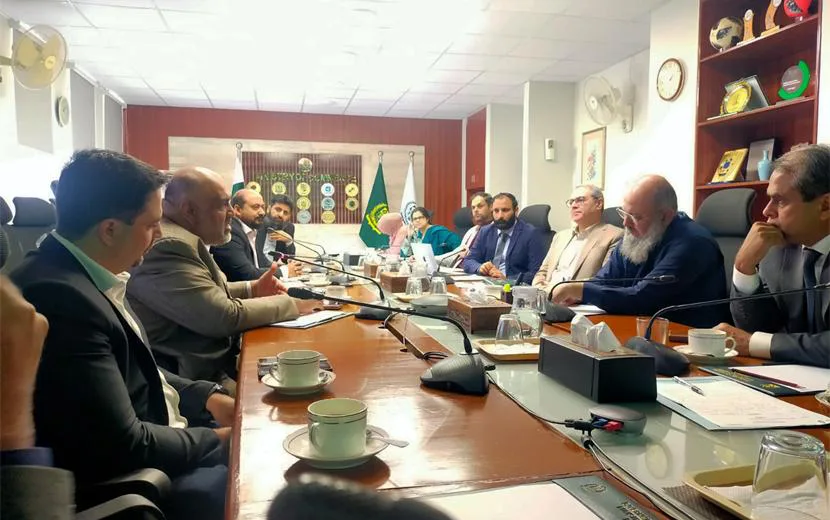
Dr. Sohail Munir, Chairperson, Pakistan Digital Authority (PDA), met Jam Kamal Khan, Federal Minister for Commerce, for a focused consultation on the Draft National Data Governance Policy 2026.
The Chairperson led the discussion alongside Dr. Sahibzada Ali Mahmud. Sahibzada Ali, Chief DPI Officer; Fouad Bajwa, Executive Director; Brigadier Aqeel Ahmed, Executive Director; Moazzam Kamran, Director; and Muhammad Yawar Jaleel, Director AICU, Ministry of IT and Telecommunication Pakistan.
The discussion turned on a single question: how can Pakistan make its data work for citizens, businesses and the economy? The answer the draft policy proposes is not a single national database. It is a federation of them. Custody of data stays with the body that lawfully collects it, connected through common standards and governed exchange rather than pooled in one place.
That architecture is what makes the once-only principle possible, under which a citizen or a business should not have to give the State the same information twice. This will reduce repetitive documentation and simplify services for citizens and businesses.
For the Ministry of Commerce, this can help:
- Transform digital trade services
- Strengthen trade intelligence
- Improve institutional interoperability
- Reduce documentation and repetitive processes
- Simplify services for exporters, importers and SMEs
The meeting also covered data sovereignty, privacy, responsible access to non-personal data, Primary Data Registers, AI, and opportunities for stronger collaboration between PDA and the National Compliance Centre (NCC), Ministry of Commerce (MoC).
The ambition is clear: from fragmented data → trusted data infrastructure → intelligence → innovation, productivity and economic value.
Pakistan does not need to put all its data in one place. It needs to make its data work together. The job ahead is infrastructure that connects what already exists, and the governance that makes it trustworthy: authoritative sources, lawful and purpose-bound exchange, common standards, and rights the citizen can exercise.