



Press Release
Digital Health in Pakistan: What the Sectoral Plan Workshops Are Building
Most national strategies are written first and consulted second. The Digital Sectoral Plan for the Healthcare Sector is being built the other way round.
The Ministry of National Health Services, Regulations and Coordination (MoNHSR&C) and the Pakistan Digital Authority (PDA) have taken it into multiple workshops across Islamabad, Lahore and Karachi, and its content is being assembled from what is said in those rooms. More workshops are being planned across the country in Peshawar, Gilgit and Muzaffarabad.
That is slower than commissioning a document. It also produces a record of who owns which part of the problem, set down in front of the people who have to work with it. That approach is deliberate: the plan forms part of the National Digital Masterplan, which PDA is mandated to develop under the Digital Nation Pakistan Act 2025, and a masterplan assembled without the provinces would not survive contact with them. Most national strategies are written first and consulted second. The Digital Nation Pakistan Act 2025 requires the opposite: comprehensive consultation aimed at broad consensus, built into how the Masterplan and its sectoral plans are developed.
A Plan Assembled Domain by Domain
Each session takes one part of the health system and asks the institutions that run it what a shared digital future state would have to look like.
The first session in Lahore, on Human Resources for Health (HRH), was facilitated by Prof. Mahmood Shaukat; the second, covering maternal, newborn & child health alongside AI, data & digital health, was facilitated by Dr. Naeem Majeed.
The next session in Karachi, was on labs, pharmaceuticals and supply chain alongside regulation and governance, with Dr. Muqeem Khan, of Aga Khan University as technical lead.
Dr. Naeem Majeed facilitated a workshop on emergency preparedness and crisis management in Islamabad. An important session was held on immunisation, disease surveillance, mental health and public health promotion at the National Institute of Health (NIH), facilitated by Dr. Mumtaz Ali Khan and Dr. Malik Muhammad Safi, Advisor to MoNHSR&C, and moderated by Saflain Haider of PDA. Lastly, in these initial workshops, there was one on research and academia at the Health Services Academy, facilitated by Shaukat Ali Khan and moderated by Mohammad J. Sear, Member, PDA.
Set out that way, the series reads less like outreach and more like a survey of the system's joints, the points where one institution's work has to become another's decision.
The Regulatory Question Was Raised From Inside the System
The NIH session put four domains in one room. Federal and provincial surveillance and immunisation programmes sat with mental health service providers, telehealth platforms and development partners, and the discussion ran across outbreak response, immunisation coverage, access to mental health care and the reach of public health messaging.
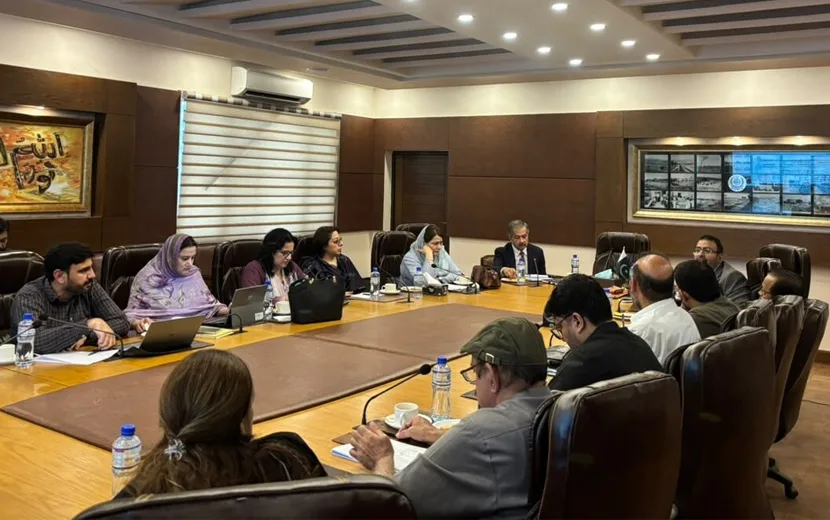
Session on immunisation, disease surveillance, mental health and public health promotion at the National Institute of Health, Islamabad, facilitated by Dr. Mumtaz Ali Khan and Dr. Malik Muhammad Safi and moderated by Mr. Saflain Haider of PDA.
It was in that session that Chief Executive Officer Dr. Muhammad Salman argued Pakistan needs a dedicated regulator to oversee the digital health space. The point carried in the room, and it did not arrive in isolation. In Karachi, regulation and governance were treated as one of two foundational areas, with data governance standards, regulatory safeguards and interoperability protocols examined directly.
Two cities, different participants, and governance surfacing in both as the harder question. The binding constraint on digital health in Pakistan looks institutional before it is technical.
This is useful for PDA, whose priority initiatives include Digital Public Infrastructure, data exchange, data governance, AI safeguards, and citizen-centric service delivery. A sector asking to be regulated is a sector planning to expand.
Resilience Is a Data Movement Problem
The emergency preparedness session drew the health, disaster management and digital technology sectors together, including the National Disaster Management Authority, the National Disaster Risk Management Fund, provincial health departments, international development partners and PDA's own leadership. The discussion stayed on real-time outbreak tracking, early warning systems and data sharing during health emergencies.
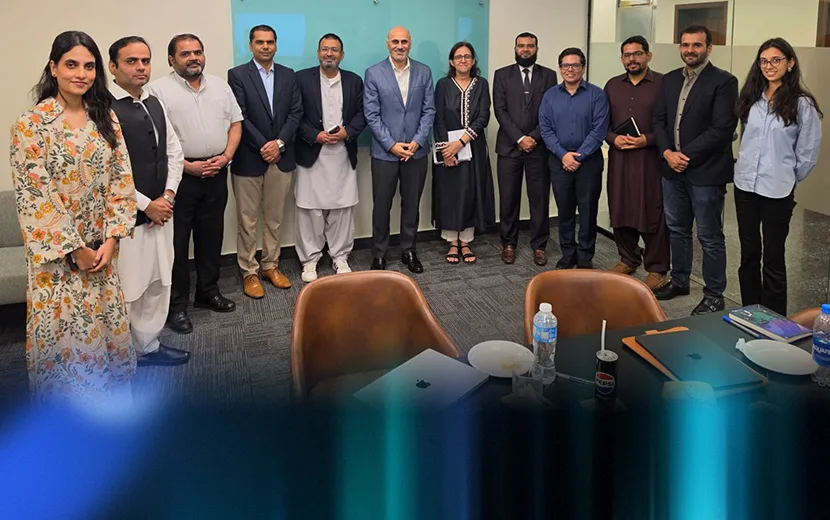
Workshop on emergency preparedness and crisis management in Islamabad, facilitated by Dr. Naeem Majeed, with participation from NDMA, NDRMF and provincial health departments.
An outbreak does not stop at the health ministry's boundary, and during one the problem is seldom that nobody holds the numbers. Somebody usually does, in a district office or a laboratory ledger. The delay sits in how long they take to reach a body with the authority to order a response, and in how many phone calls it takes to confirm them on the way. NDMA and NDRMF were at the table while the design is still on paper, and routes between institutions are cheap to draw at that stage and expensive to retrofit once systems are running.
Where Digital Health Becomes Something Citizens Can Feel
The Karachi sessions on labs, pharmaceuticals and supply chain covered real-time inventory tracking, end-to-end transparency and laboratory data sharing, with provincial health departments, the Director General Health of Sindh and Gilgit-Baltistan, federal and provincial Healthcare Commissions and the pharmaceutical industry taking part.

Consultative workshops in Karachi on labs, pharmaceuticals and supply chain alongside regulation and governance, with Dr. Muqeem Khan of Aga Khan University as technical lead.
Supply chain is where the state and the private sector share the same rails, and where a citizen notices digital transformation whenever a medicine is in stock, or a test result does not need to be repeated at the next facility. Standards written here have to work for a manufacturer and a district warehouse alike, or the compliance will be on paper only.
The Workforce Is Part of the Infrastructure
The Lahore workshops brought Punjab's health sector leadership together with a wide group of stakeholders, first on human resources for health, facilitated by Prof. Mahmood Shaukat, then on maternal, newborn and child health alongside AI, data and digital health, facilitated by Dr. Naeem Majeed. He is one of the few threads running visibly between cities.
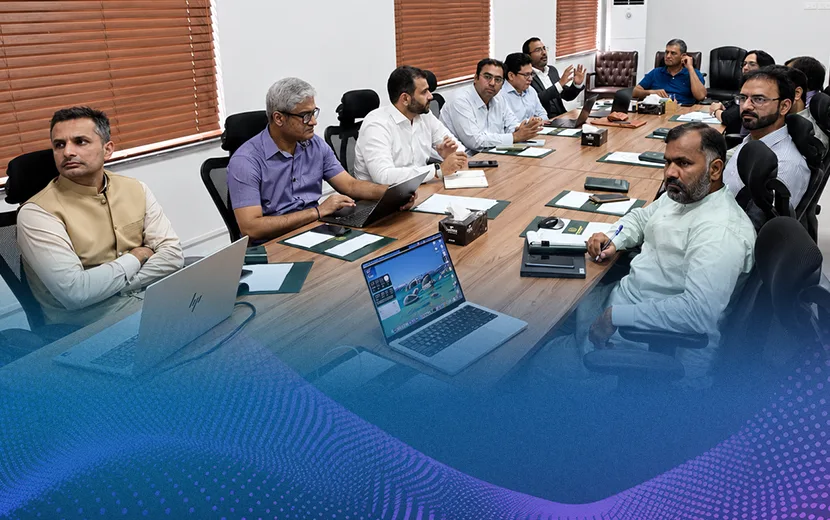
Lahore workshops, on human resources for health, facilitated by Prof. Mahmood Shaukat, and on maternal, newborn and child health alongside AI, data and digital health, facilitated by Dr. Naeem Majeed.
Taking human resources first was a worthy choice. A digital health system is operated by whoever is at the counter of a basic health unit at eight in the morning, and it gets used the way that person can afford to use it between patients. Workforce planning here has long been counted in sanctioned posts and vacancies. A digitised system adds a column to that ledger: who can be trained on what, and how soon.
The pairing in the second session is the more interesting decision. Maternal, newborn and child health was placed beside AI, data and digital health in the same room, which sets the technology discussion next to one of the outcomes by which Pakistan's health system is most closely judged. AI talked about on its own drifts toward capability. AI talked about beside a maternal health indicator has to answer for something.
The Evidence Layer Needs an Owner
The Health Services Academy session in Islamabad brought researchers, academic institutions and development partners onto research data infrastructure, linkages between academia, industry and government, research governance and international practice. Dr. Shahzad Ali Khan, Vice Chancellor, HSA, closed on the Academy's commitment to evidence-based health research.
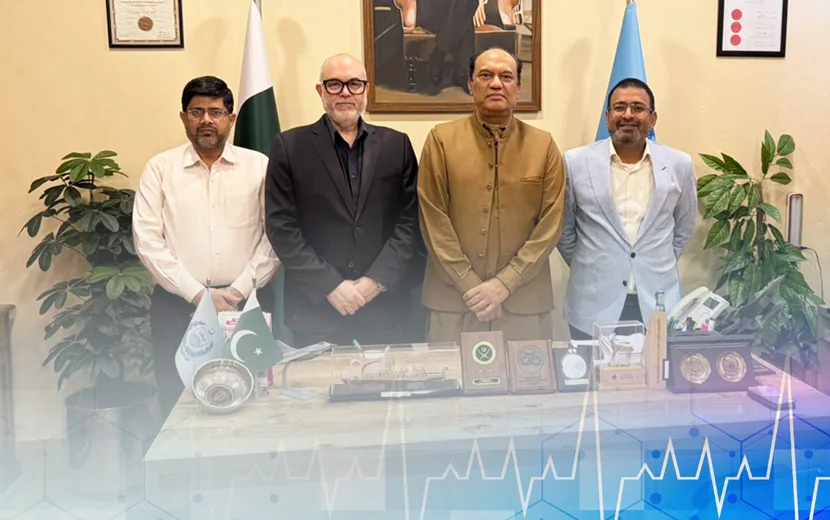
Research and academia workshop at the Health Services Academy, Islamabad, facilitated by Mr. Shaukat Ali Khan and moderated by Mr. Mohammad J Sear, Member, PDA.
A digitised health system produces evidence continuously, whether or not anyone has decided how it may be used. Research governance settles which of it becomes public knowledge, on what consent basis, and who may analyse it. Pakistan's universities are also a place from which the plan can be independently assessed once in force, and a plan that builds in its own critics tends to last longer.
What the Series Is Producing
The plan will be judged on delivery. It always is. But the workshops have produced what a desk exercise would not: a regulatory gap named on the record by the institution that feels it, disaster management and industry brought into a health discussion at the design stage, and positions taken in public by the bodies that will implement it.
The remaining sessions will determine how much of it is carried through, and the harder work begins when the plan has to be built rather than discussed. But a strategy that arrives with its constraints already named by the institutions that live with them starts from an honest position. PDA's own reading of the series is that this is a plan no single institution could write alone.